
OUR SERVICES
Practical thinking.
Purposeful installations.
Police, covert and emergency service conversions, electronics, decommissioning, security systems, automotive window films and tactical equipment, with every project planned around your requirements.
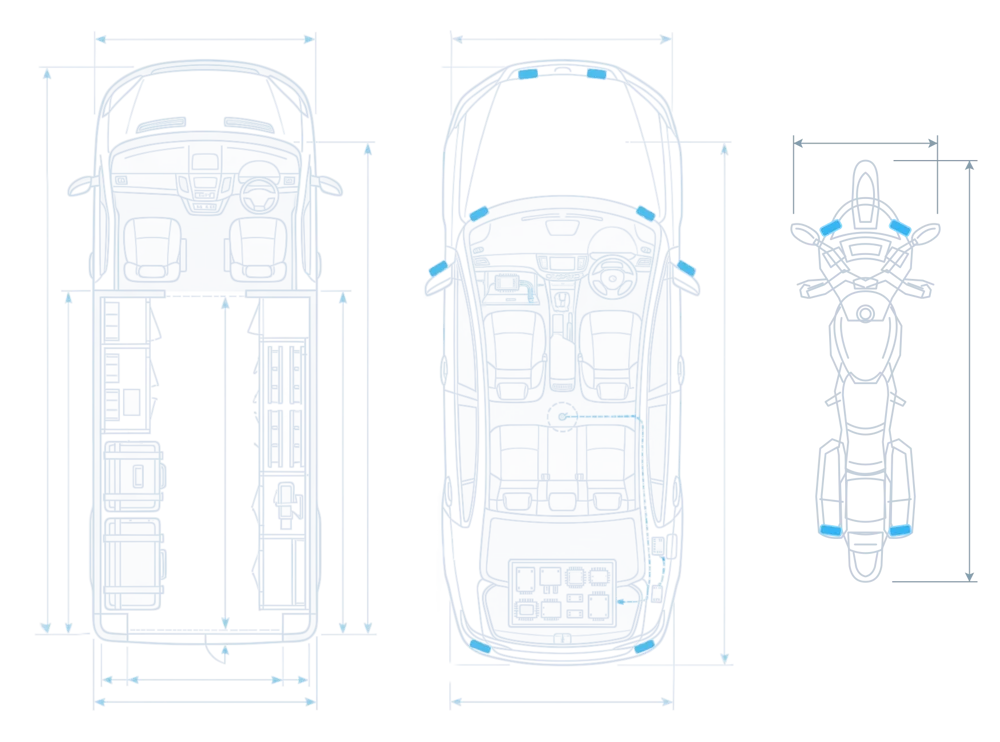
BUILT AROUND YOUR REQUIREMENTS
A vehicle with
a job to do.
A conversion starts with how you use your car, van or motorcycle. Together, we choose the equipment and work out where it fits best.
The level of discretion you need guides where equipment sits and how it’s finished. Bespoke racking and secure storage make use of the space available for the kit you carry.
- Public warning equipment options: overt, discreet and covert
- TETRA communications
- Telematics
- Tracking
- Security upgrades
- Lighting adaptions
- Bespoke equipment storage
- Digital surveillance equipment
- Tactical equipment
- Individual vehicle requirements
DECOMMISSIONING
Vehicle
Decommissioning.
When a police or other emergency service vehicle leaves service, VTS removes its specialist equipment. The team follows legal and operational standards for removal, handling and disposal.
Preparing the vehicle for resale also means restoring its appearance as far as possible to help preserve its value.
Public warning equipment
Before the blue lights and sirens come out, we test them to see which units still work and whether they meet the specification for your next vehicle.
Communications
Testing TETRA radios and other encrypted communications equipment before removal helps identify what you can use again. Certified storage is available for the equipment after decommissioning.
Technical surveillance equipment
Removal of technical surveillance equipment as part of vehicle decommissioning.
Security and tracking systems
Removal of security and tracking systems when decommissioning the vehicle.
Include the make, model, year and a list of equipment to remove in your enquiry. Before work starts, we’ll discuss what you can reuse or recycle to reduce costs and waste in line with your environmental policies.
Discuss decommissioningSECURITY
Security.
Planned around your vehicle.
Digital immobilisers, alarms and trackers help protect against vehicle theft in different ways. The right choice depends on the protection you need and the security systems already fitted.
Immobiliser systems
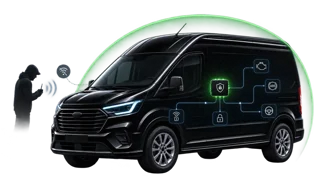
A digital immobiliser adds a barrier against keyless theft by preventing the vehicle from being driven away. It communicates with the engine control unit (ECU), body control module (BCM), or both, sending commands that restrict vehicle operation.
For vehicles with keyless entry, this offers extra protection alongside the factory security system. The immobiliser can also work with an external car alarm as part of a wider security setup.
- A choice of ways to disarm
- Use your personal PIN, an ID transmitter or a smartphone app to disarm the immobiliser, giving you a choice of how you authorise vehicle use.
- Automatic recognition when you’re nearby
- With your ID transmitter or smartphone within range, the system recognises your presence and disarms automatically. Your PIN gives you another way to disarm the system if you leave the transmitter behind.
- Keep your PIN private during servicing
- Enable service mode before handing your vehicle over for maintenance or repairs. The workshop can then carry out its work without you having to share your personal PIN.
- Discreet operation
- While disconnected from a phone, the immobiliser does not emit electromagnetic waves. This leaves no broadcast signal for an electromagnetic wave scanner to pick up.
Vehicle tracker installation
A GPS tracker shows your vehicle’s location and can help with recovery if it’s stolen. For a fleet, the ability to monitor movements and review journeys may also matter when choosing a system.
Depending on the tracker and service, features can include location updates, journey history and alerts for unexpected movement. Tell us which features matter to you when you enquire.
A discreet installation keeps the tracker and its wiring out of sight, making the system harder to find or tamper with.
Van security solutions
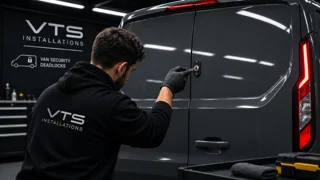
Van security needs to fit your working day. Where you park, which tools you carry and how often you open the doors all help determine which fittings suit your van.
Hook deadlocks add an extra locking point to a van door. Anti-peel kits help resist attempts to pull or bend the door away from the bodywork.
Latch shields, handle shields and window guards offer further protection at vulnerable access points. Inside the van, lockable chests and drawers keep tools and equipment secure.
Share your vehicle’s make, model and year, along with the protection you need. We’ll confirm compatibility and installation requirements with you before work begins.
Discuss vehicle securityAUTOMOTIVE WINDOW FILMS
Automotive Window Films
Privacy, cabin comfort and glass protection call for different films. Options range from privacy window tints to security barrier films for suitable glazing.
Full privacy glass window tinting
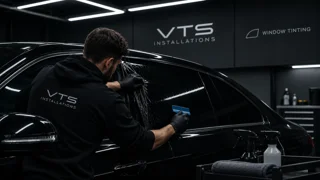
Window tinting applies a film to the inside of your vehicle’s existing glass to create a privacy glass finish. Darker films on rear side windows and rear glass reduce how easily people can see into the vehicle, helping to screen passengers and belongings while giving the glazing a consistent appearance.
Depending on the film chosen, tinting can also reduce glare, limit solar heat entering the cabin and filter UV rays, helping improve passenger comfort and reduce fading of interior trim. Privacy varies with the shade and lighting conditions.
UK legal tint levels & in-house testing
Legal tint limits are measured by visible light transmission (VLT): the percentage of light that passes through the window. A lower percentage means a darker tint. The limits apply to the existing glass and any added film combined.
GOV.UK gives these minimum light transmission levels:
- First used before 1 April 1985: 70% for both the windscreen and the front side windows.
- First used on or after 1 April 1985: 75% for the windscreen and 70% for the front side windows.
- Rear side windows and rear windscreen: there is no legal minimum light transmission for tinting.
Factory-tinted glass already lets less light through, so the film’s stated percentage alone won’t tell you whether a window meets the limit. An in-house test measures how much light passes through the glass and film together.
Read the GOV.UK window tinting rulesOptional security barrier films
Security barrier films add a tough, bonded layer to suitable vehicle glazing. If the glass breaks, the film helps hold the fragments together, reducing loose shards and making the glass harder to push through. This can help delay opportunistic smash-and-grab attempts and forced entry.
The glass can still be broken, and protection depends on the film, glazing and installation. Clear or tinted options may be suitable, depending on the glazing and the level of privacy you need. If you also want privacy tinting, ask about compatibility when planning the installation.
To find a suitable film, tell us your vehicle’s make, model and year, and which windows you’d like treated. For the windscreen and front side windows, the choice depends on how much light the glass and film let through together.
Discuss automotive window filmsTACTICAL EQUIPMENT
Tactical Equipment
VTS designs and manufactures tactical equipment in house for officers and their departments. Each design starts with a practical question: what does your team need the equipment to do during a shift?
A list of the kit you carry, the vehicle you use and the space available gives us a starting point for discussing storage and fitting options.
Discuss tactical equipmentTHE RIGHT START
A clear brief.
A practical next step.
Start with the make and model, what the vehicle needs to do and when you need it. Those details help us agree the scope with you and check which equipment will fit before work begins.
Tell us what you needYOUR NEXT PROJECT
Let’s make your vehicle
work for you.
Have a conversion in mind or an installation to discuss? Start a conversation with VTS.
Make an enquiry